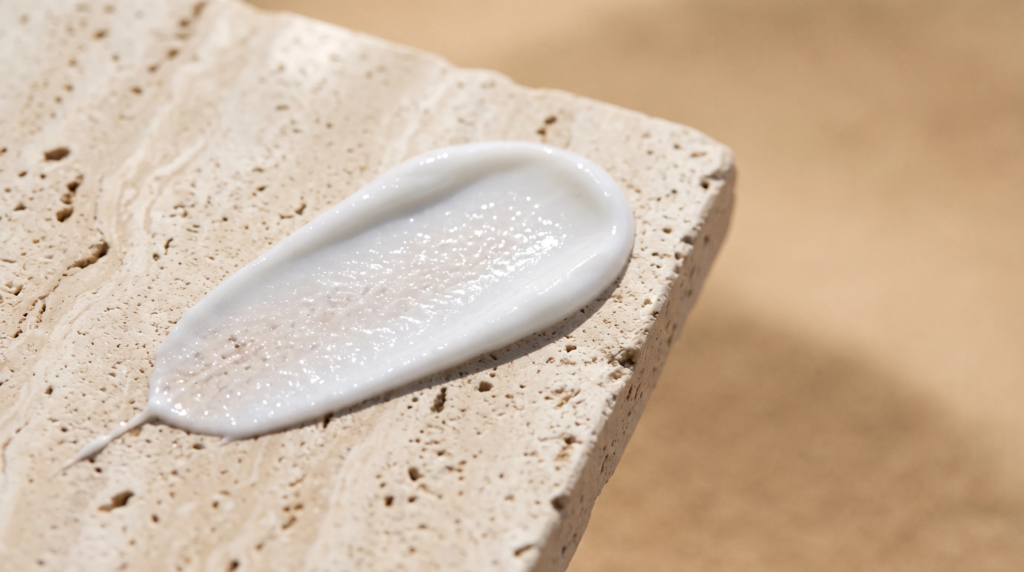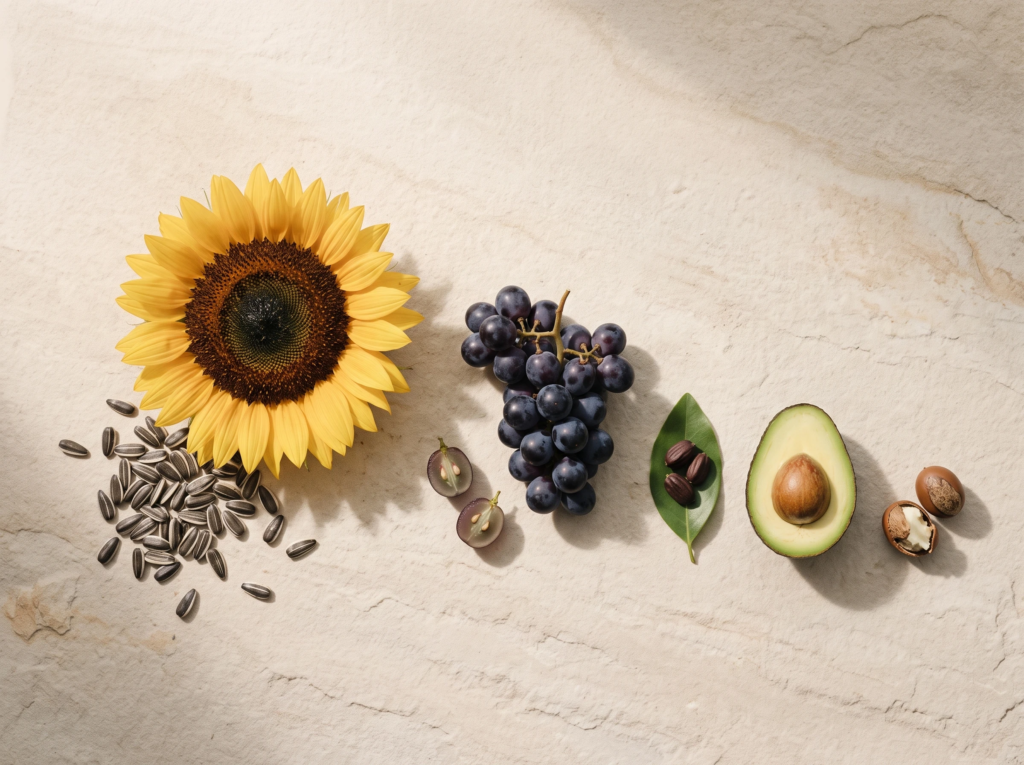
Two ingredients sit near the top of the Soothing Emulsion’s list, and neither one announces itself. Rice ferment has been in Japanese skincare for decades. Perilla is a leaf most people in North America have only met as a garnish next to sashimi. Together they explain most of why the emulsion feels the way it does.
What rice ferment actually is
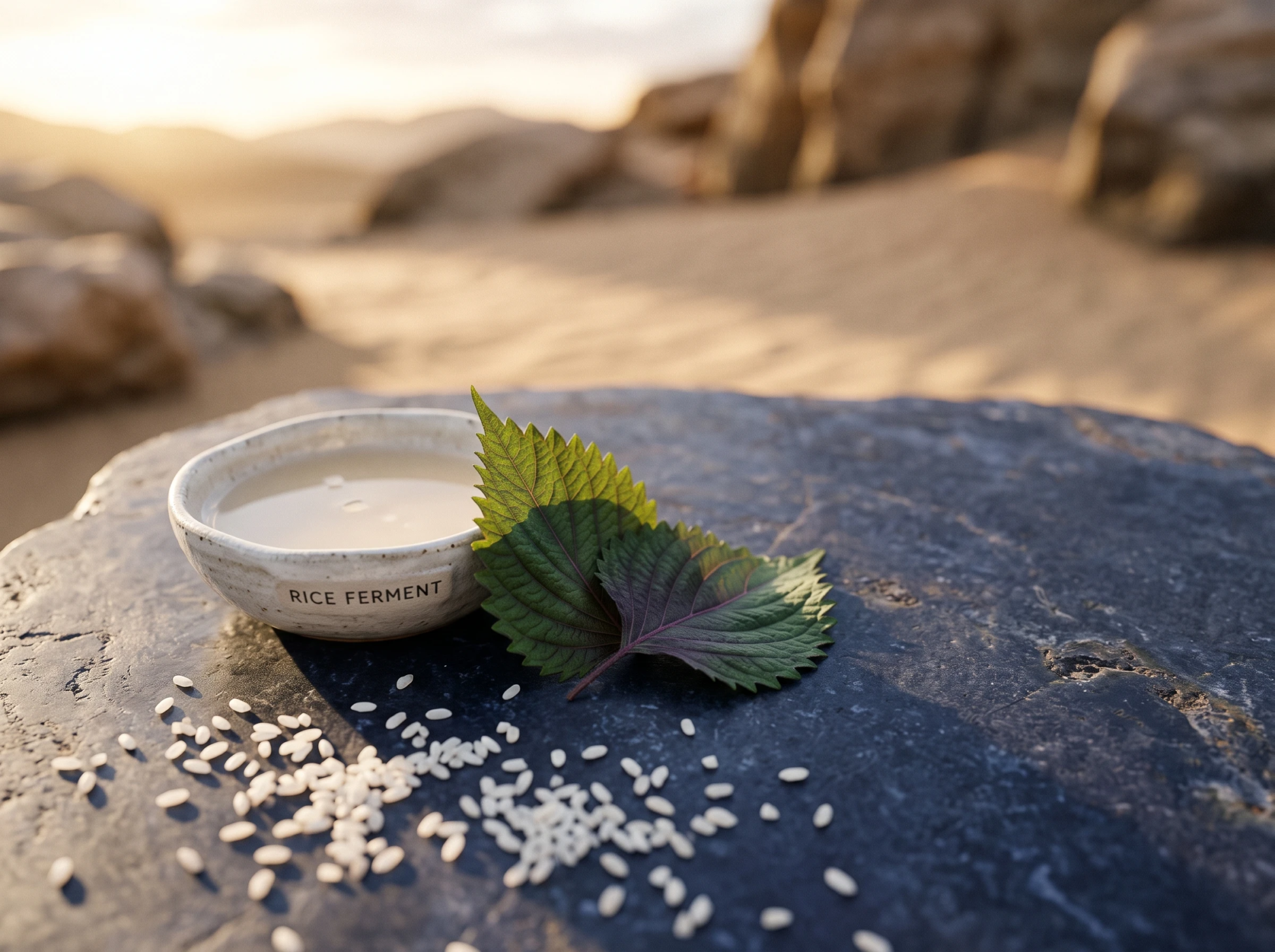
Rice ferment filtrate is what’s left after rice is fermented with yeast and the solids are strained out. The liquid carries amino acids, small peptides, polysaccharides, organic acids and vitamins, compounds the fermentation produces that plain rice water doesn’t have in the same quantity.
Two versions appear on the Soothing Emulsion’s ingredient list: Saccharomyces/Rice Ferment Filtrate, and Saccharomyces Ferment Filtrate.
What that mix does on skin is hold water. The amino acids and polysaccharides behave as humectants, pulling moisture in and keeping it at the surface. It’s the same job glycerin does, and glycerin is in this formula too, but arriving by a more complicated route and bringing several kinds of molecule with it rather than one.
The observation that fermented rice leaves skin feeling softer is old. It’s why the ingredient became a fixture in Japanese and Korean formulas long before Western brands started putting it on the front of the bottle.
Perilla, and why it isn’t basil
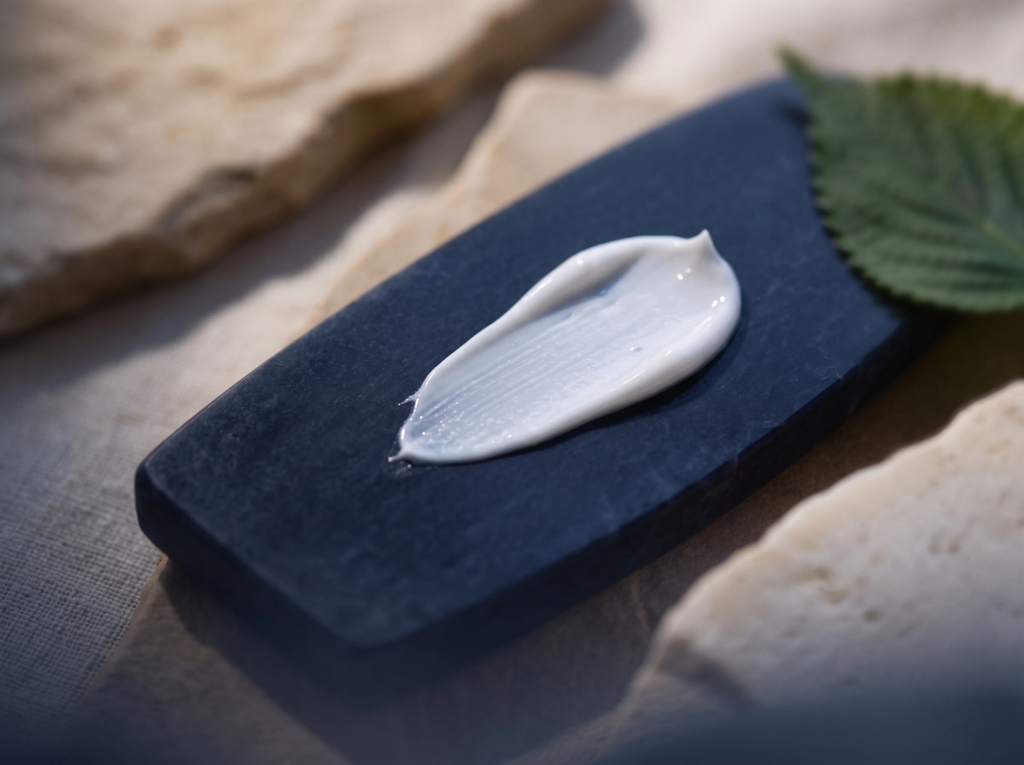
Perilla ocymoides is shiso, if you’ve eaten it. The leaf is jagged and serrated, purple on one side and green on the other. It belongs to the mint family, which is why photographs of it get mistaken for basil so reliably that we have to specify “not basil” in our own photography notes.
Its leaves are unusually rich in rosmarinic acid, a polyphenol with well-documented antioxidant behaviour in laboratory work. Perilla leaf extract has also been studied for its effect on irritated skin, though that research is mostly preclinical rather than large human trials. We’d rather say so than imply more certainty than exists.
The honest description of what it’s doing in a cosmetic formula: it’s a plant extract with antioxidant polyphenols, included for comfort rather than correction.
Why the two work together
One holds water. The other is an antioxidant. Neither is doing anything dramatic, which is the whole point of an emulsion. It’s the layer that goes between cleansing and your serum, adding hydration without weight.
The rest of the list runs to shea butter extract, glycerin, betaine, sodium hyaluronate, hydrogenated polyisobutene and dimethicone. It reads like a hydrating layer rather than a treatment, and it behaves like one.
Where it goes
After cleansing, before your serum. A small amount, smoothed on rather than rubbed in. It absorbs in seconds and leaves no film, which is what makes it workable in the morning under everything else as well as at night.
If your skin feels tight after cleansing, that pull across the cheekbones that shows up in cold weather, this is the step that deals with it.
In the collection: Soothing Emulsion, 50 ml.
Night Dunes products are cosmetics, formulated to condition and hydrate skin and improve how it looks and feels. Nothing here is medical advice and no product is intended to diagnose or treat any condition. If you have a known allergy or a skin concern that's bothering you, talk to a professional first.