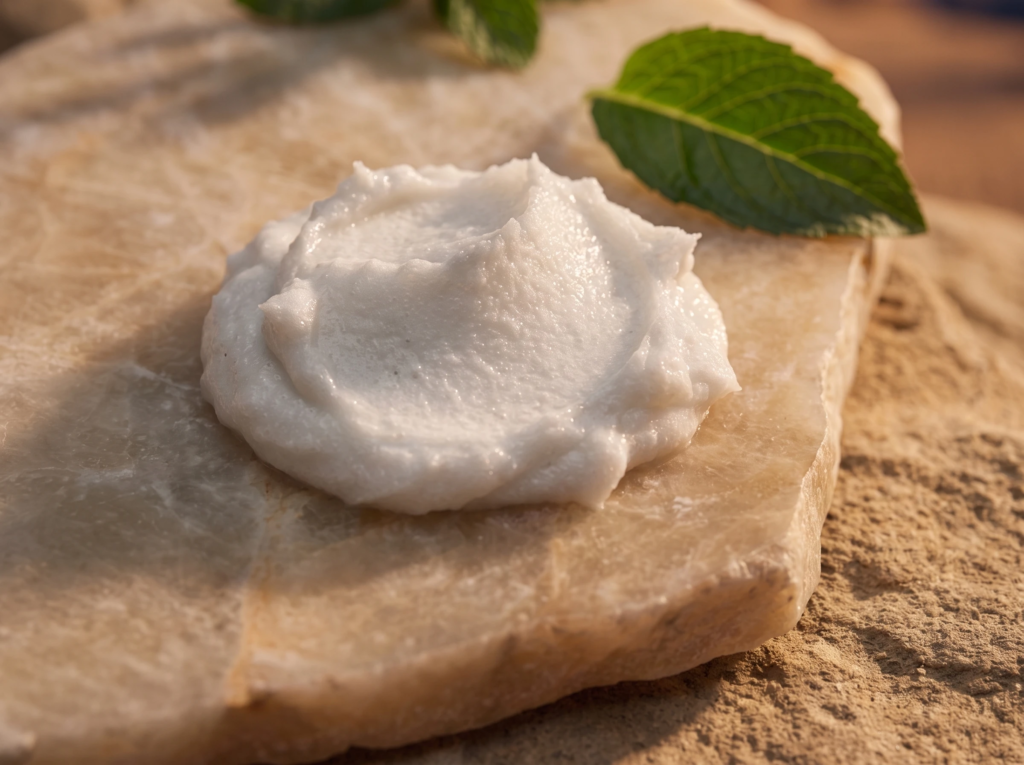
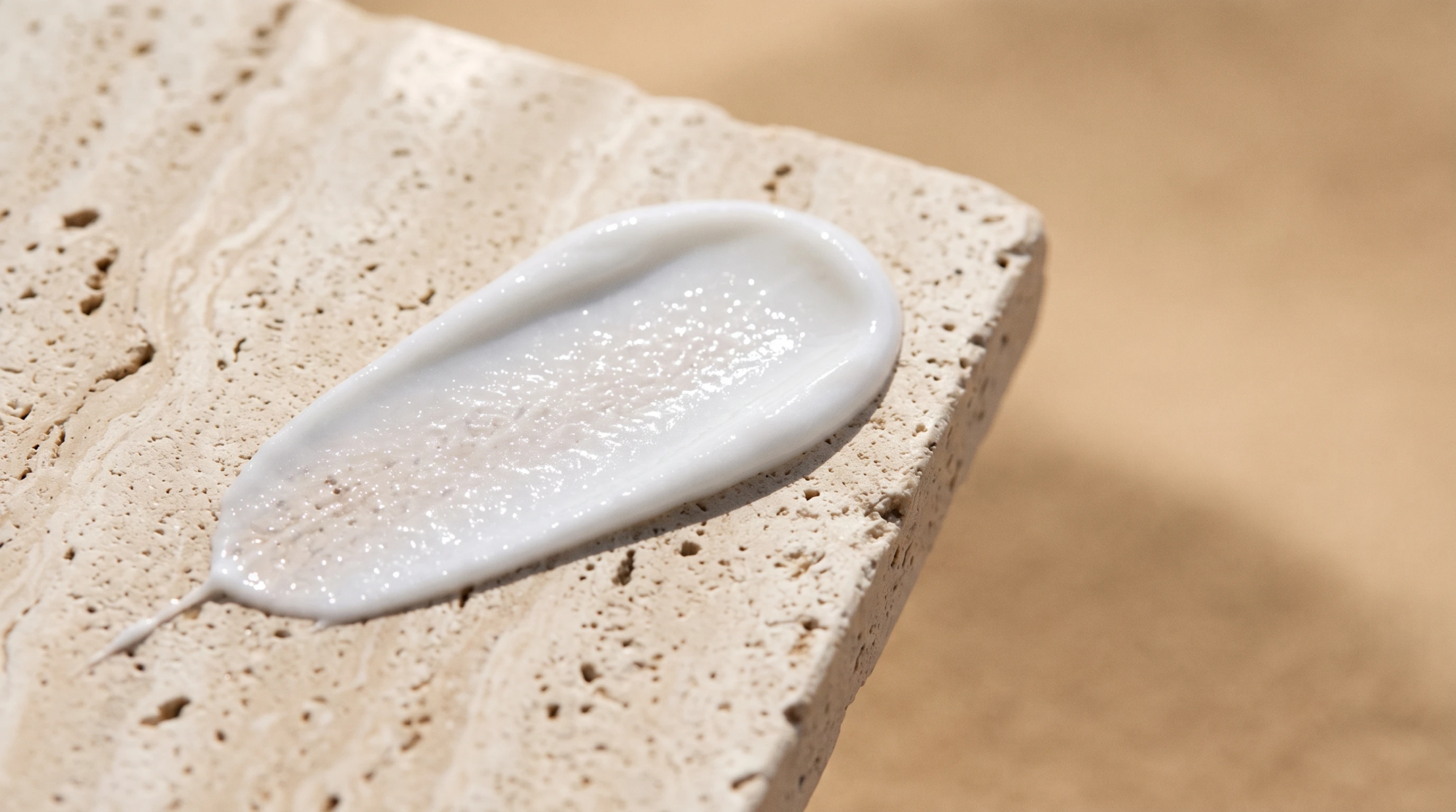
The complaint about day moisturizers is almost always the same one. Either it’s light enough to disappear and your skin feels tight by noon, or it’s rich enough to work and you can see it sitting on your face by mid-afternoon.
The Oil Control Hydrator’s answer is two ingredients doing opposite halves of the job.
Squalane, and the letter that matters
Squalene with an “e” is something your own skin makes. It’s a component of sebum, reported at around 12 percent of sebum lipids with individual studies putting the figure anywhere from 12 to 20, and it’s part of why undamaged skin feels supple with nothing on it at all.
Squalane with an “a” is the hydrogenated version, the same molecule with the reactive double bonds saturated out. That one change does two useful things. It makes the ingredient far more stable, so it doesn’t oxidise and turn the way unsaturated plant oils do. And it changes how it behaves on skin: squalene is comedogenic, while squalane is generally rated non-comedogenic and turns up constantly in formulas aimed at oilier skin.
What it does there is work as an emollient. It fills in between skin cells, absorbs without a greasy finish, and because its structure is close to what skin already produces, it goes in rather than sitting on top.
That last property is the reason it works in a product made for people who don’t like the feel of moisturizer.
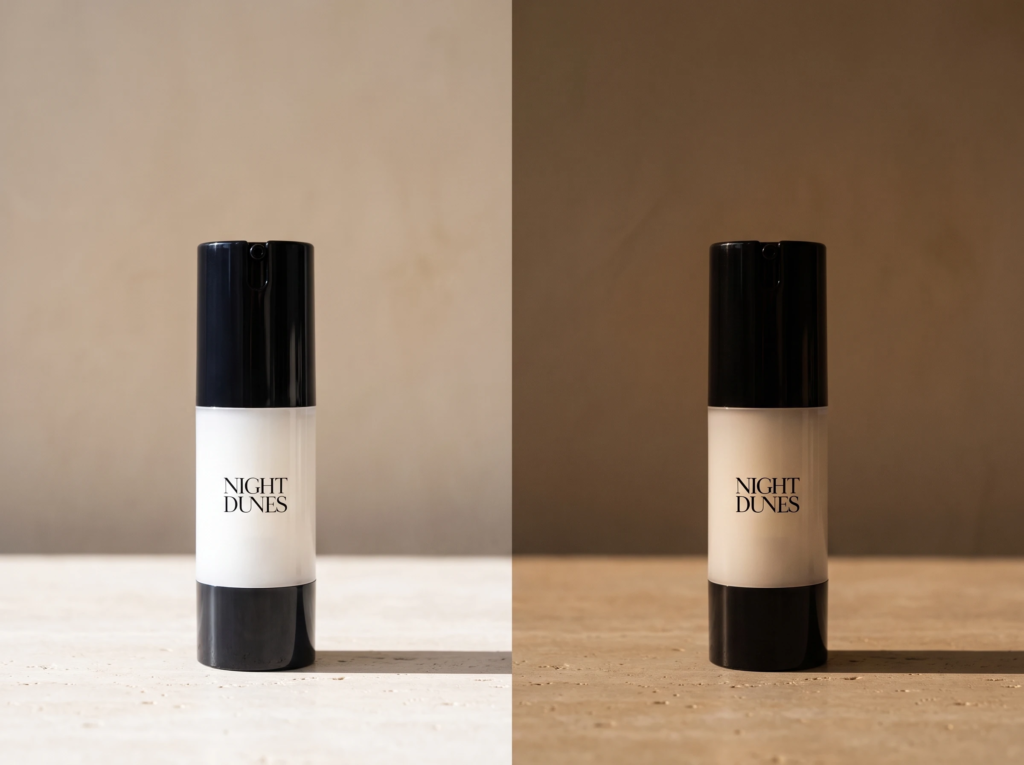
Hyaluronic acid, doing the opposite job
Where squalane is an emollient, hyaluronic acid is a humectant. It attracts water and holds onto it. The figure everyone quotes is that it binds up to a thousand times its weight in water, which is a laboratory measurement rather than a description of what’s happening on your face, but the direction is right.
Both hyaluronic acid and its salt form, sodium hyaluronate, appear across the Night Dunes formulas. The Oil Control Hydrator carries the acid; the Soothing Emulsion carries the salt. Sodium hyaluronate has a lower molecular weight, which is why formulators reach for it, since the smaller molecule sits differently both in the product and on skin.
One caveat worth knowing. Humectants pull water out of the air when the air has water to give. In genuinely dry conditions, a Prairie winter or a long flight, a humectant does better with something over the top of it to hold what it’s gathered. Which is the argument for squalane and hyaluronic acid being in one bottle rather than two.
The rest of the formula
The list also runs to betaine, glycerin and trehalose, all humectants, plus dimethicone for slip, purslane extract and chamomile oil. It’s a light formula that finishes matte, and that finish is what “oil control” refers to. It isn’t a claim about how much oil your skin produces.
Where it belongs
Morning, after the emulsion, last step before makeup if you wear any. It sits flat under foundation, which is not a small thing.
Its opposite number in the collection is the Extreme Moisture Blend: same size bottle, same pump, a much richer formula, meant for night. Between them they’re the day and night pair the whole collection is built around.
In the collection: Oil Control Hydrator, 30 ml.
Night Dunes products are cosmetics, formulated to condition and hydrate skin and improve how it looks and feels. Nothing here is medical advice and no product is intended to diagnose or treat any condition.